Halong Bay, Vietnam

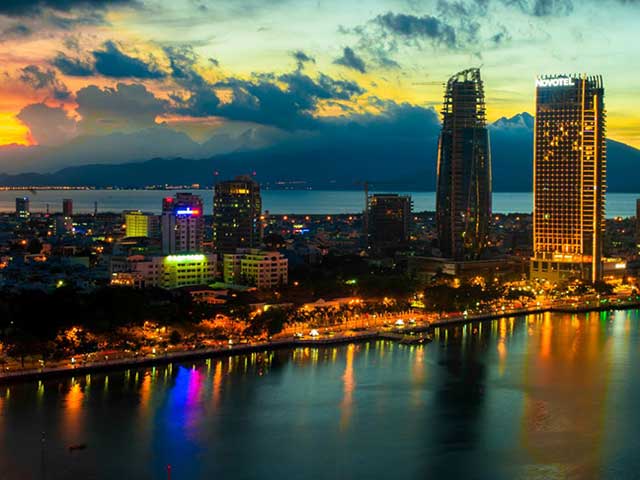
Halong bay, Vietnam

Ha Long Bay is a UNESCO World Heritage Site, and a popular travel destination, located in Quang Ninh province, Vietnam. Administratively, the bay belongs to Hạ Long City, Cẩm Phả town, and part of Van Don district

Mt.Phousi, Luang Prabang, Laos

The Phousi Mountain (Luang Prabang)

The Phousi Mountain is situated in the centre of Luang Prabangs. To climb up the mountain can be hard but it is definitely worth the trip. There is a formidable view from the top of the mountain where you can see "The Royal Palace", and the surrounding rivers and villages.

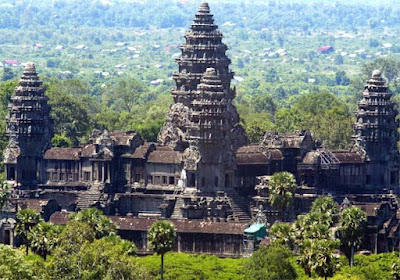
Angkor Wat, Cambodia

Angkor Wat, Cambodia

Angkor Wat is the largest Hindu temple complex and the largest religious monument in the world.

Shwedagon Pagoda, Burma

Shwedagon Pagoda, Burma

The Shwedagon Pagoda officially titled Shwedagon Zedi Daw, also known in English as the Great Dagon Pagoda and the Golden Pagoda, is a 99 metres gilded pagoda and stupa located in Yangon, Burma.

Thien Mu pagoda

Thien Mu pagoda, Vietnam

Thien Mu Pagoda is a historic temple in the city of Huế in Vietnam. Its pagoda has seven storeys and is the tallest in Vietnam.

Showing posts with label UNESCO. Show all posts

Nov 18, 2014

Dong Van Karst Plateau Geo-Park continues its global status!

The United Nations Educational, Scientific and Cultural Organisation ( UNESCO) has re-recognised the Dong Van Karst Plateau Geo-Park in the northernmost mountainous province of Ha Giang as a member of the Global Network of National Geoparks for the 2015-2018 period.
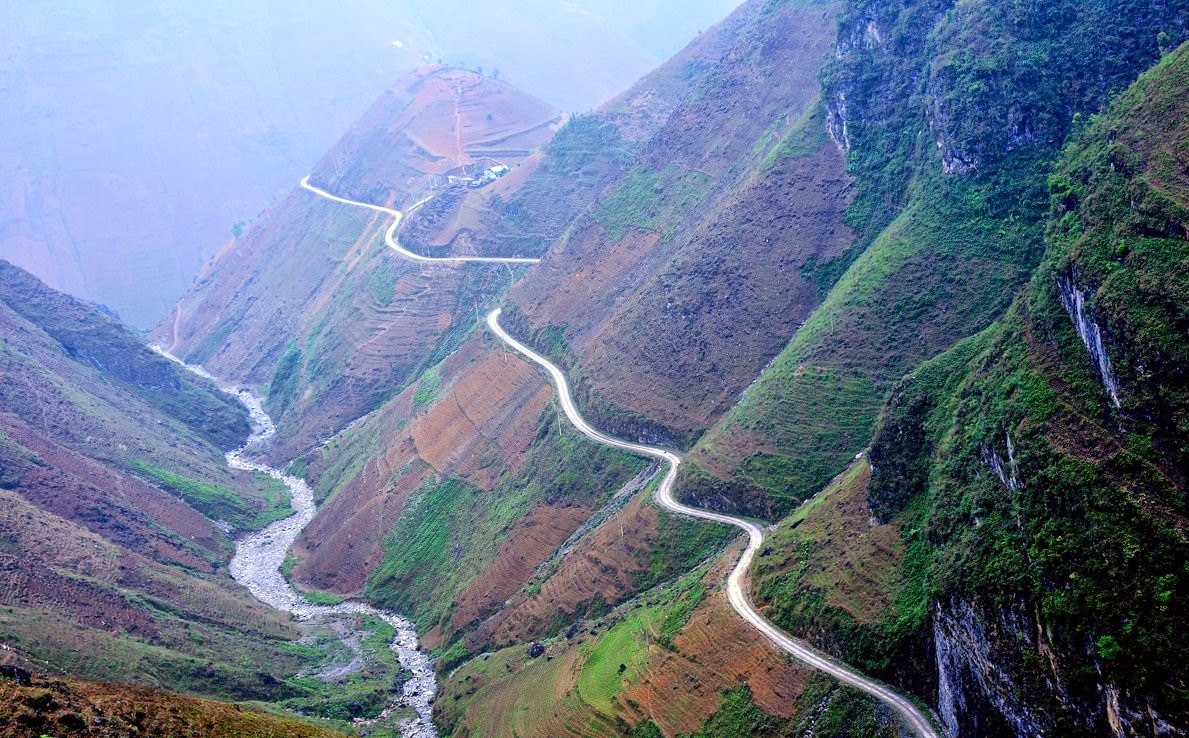
Representatives from UNESCO Vietnam handed over the recognition decision to the locality’ leaders at a conference in Dong Van district on November 12, which was to review the development process of the park over the last four years. 
Dam Van Bong, Chairman of the provincial People’s Committee said it is a great honour for the locality and Vietnam in general to be received the re-cognition, adding that this is the responsibility for the province to preserve and promote outstanding values of the heritage and introduce them to the world.
The park is one of the most attractive tourist sites in Ha Giang, contributing to luring more holiday-makers to the province and benefiting local people. 
The local authorities have run communication campaigns in all the hamlets and communes in the locality in a bid to raise public awareness of conserving and promoting values of the heritage. 
Dong Van plateau was recognised as a member of the Global Network of National Geoparks in 2010, becoming Vietnam’s first geological park and the second in Southeast Asia.
Covering a total area of 2,356 km2, it is 80 percent limestone and contains the fossils of thousands of species of prehistoric creatures from 400-600 million years ago.
It is also home to over 250,000 people from 17 different ethnic groups, who boast unique cultures that have been fostered over the centuries. Recently, 14 archaeological sites were excavated in Dong Van, Meo Vac, and Yen Minh districts, in Dong Van plateau, revealing hundreds of relics believed to appear in the prehistoric and protohistoric times.

Visit us at Threeland Travel Vietnam to get further information about traveling around the world and Vietnam tours; to have access to the best travel services and to meet our professional consultants who're always available for help. For any inquiry please contact us.

Nov 9, 2012

Absolute Hotel Services Signs Hotel in Luang Prabang, Laos

Luang Prabang, Laos
Luang Prabang, Laos
From Threeland Travel's Blog - November 2012
Absolute Hotel Services has signed a new U Hotel.

Scheduled to open in 2014, the 50-room U Luang Prabang sits on a peninsula of the Mekong River from which guests can enjoy the of the mighty river, mountains and sunsets.

The overall design of the resort will be in an authentic Luang Prabang style with modern influences. The facilities will include a specialty restaurant, a library/lounge, a gym, spa facilities, a river terrace and swimming pool.

U Luang Prabang will also have access via a walking bridge directly to the old town just 50 meters away.

“We are delighted to announce our first U property in Laos and especially located in the iconic town of Luang Prabang, a UNESCO site. With the U Hotels & Resorts brand now represented in Thailand, India, Indonesia, Vietnam and Laos the destination coverage for our U guests is growing at a rapid pace. With the U Luang Prabang enjoying such an amazing location on the banks of the Mekong River we are assured of yet another inspired property,” said Jonathan Wigley, CEO of Absolute Hotel Services Group.

Threeland Travel Laos provides interesting Laos tours for your Laos vacations and Laos holidays. Check out Laos travel to unwind yourself. Please contact us for further information and instant advice.

Oct 29, 2012

The Forgotten Temple: British Architect Restoring Historic Cambodian site for Sustainable Tourism

Banteay Chhmar
Banteay Chhmar
From Threeland Travel's Blog - October 2012
Meet the British architect who’s taken on the mother of all restoration projects in the Cambodian jungle. John Sanday is determined to restore a magnificent temple with the Cambodian people.

In the middle of a Cambodian jungle lies 800-year ruins of Banteay Chhmar (pronounced Ban-tay She-mar), one of the last great untouched temples in Cambodia. Now, one British man is determined to restore the historic site.

Built by King Jayavarman VII in the late 12th or early 13th century, Banteay Chhmar was left for hundreds of years to ravish of time, monsoon seasons and the advancing jungle. But now, thanks to the Global Heritage Foundation (GHF), the temple is being restored with the Cambodian people.

John Sanday OBE, a remarkable British architect and conservationist who has lived with his family in Kathmandu, and dedicated his life to preserving cultural buildings and monuments all over Asia, is essential to this restoration project.

John talks to Craig Stennett in the latest issue of Readers Digest, out tomorrow, about his vision for transforming Banteay Chhmar into a tourism site with a difference. 

John is certain that he does not want Banteay Chhmar to mimic Angkor Wat, where mass tourism has damaged the temples and jeopardises the site’s very survival. Instead, he believes that properly managed sustainable tourism can bring economic and social benefits to rural communities. One of his main aims is to involve local people at all stages.

He hires people from nearby villages and trains them into a skilled workforce that can maintain and manage the site. “I’m proud of the guys working here,” John says. “I’ve trained them and they can manage 
themselves.
“They know what they’re doing now.” There are no hotels or guest houses in the area, so tourists will stay with local families and eat with them, sharing what is still largely an agrarian way of life. The restored temple will be at the spiritual heart of the community.

John studied architecture at Bristol University and went to Nepal on a Unesco contract in 1970, and two years later he moved his wife and first son to Kathmandu.

His plans for Banteay Chhmar involve keeping the “romance alive” for travellers hoping to see an ancient historic Cambodian temple away from the swath of 7000 tourists a day at Angkor Wat.

John says: “Most tourists have a dream of visiting Cambodia and walking alone around an ancient historic city in the middle of the jungle. We hope we’ll be able to keep some of that romance alive here at Banteay Chhmar."

Although he’s in his sixties now, John carries the same passion and drive for his restoration work, and he’s even brought sophisticated technology to the middle of the jungle as a solution to figuring out what bit goes where, with a tent on site filled with laser-scanning equipment.

Following the hard, physical work of restoring the temple, John’s real hopes for Banteay Chhmar lie in the benefits and prosperity the extraordinary site will provide for local people. He says, “It is the local people who will ultimately ensure the temple’s future and preservation.”

Visit us at Cambodia Vacations to get further information about traveling around the world and exploring Cambodia; to have access to the best travel services and to meet our professional consultants who're always available for help. For any inquiry please contact us.

A warm welcome from Threelanders.

Sep 17, 2012

Funding grows to restore Angkor Wat

Angkor Wat Cambodia
Angkor Wat - Cambodia
From Threeland Travel's Blog - September 2012
The Cambodia government signed an agreement with the United Nations Educational, Scientific and Cultural Organisation, late last week to assist in safeguarding Angkor Wat, the country’s most prestigious World Heritage site.

The deal was inked between Cambodia’s Deputy Prime Minister and Minister in charge of the Council of Ministers, Sok An and UNESCO Representative to Cambodia, Anne Lemaistre. Rome University’s Professor, Valter Maria Santoro, who heads the Italian technical mission for stone consolidation in the temple, said the two-year project will focus on the restoration of a moat embankment at Angkor Wat.

Mr Sok An said the second phase project will cost US$250,000 including US$200,000 from the Italian government and US$50,000 from the Cambodian government.

“The Italian government, through UNESCO, has been involved in helping to safeguard Angkor Wat Temple since 1994…. the continuous support signifies a further cooperation between Cambodia, UNESCO and Italy.”

Currently, Cambodia has been collaborating with 14 countries and 28 international teams who are handling 60 different projects to preserve and restore the temple.

The Angkor archeological park is Cambodia’s most important cultural tourism attraction, located 315 km from the capital Phnom Penh.

The temple was designated a World Heritage Site by UNESCO in 1992.

From January to June this year, 1.06 million international tourists visited the temple, with South Korea, Vietnam and China topping the suppliers’ list. There were 61,340 Thai tourists, a 201% increase over the same period.

Visit us at Threeland Travel Cambodia to get further information about traveling around the world and exploring Cambodia; to have access to the best travel services and to meet our professional consultants who're always available for help. For any inquiry please contact us.

Aug 14, 2012

Master plan focuses on Hanoi’s heritage

Thang Long Imperial Citadel
From Threeland Travel's Blog - August 2012
HANOI, 7 August 2012: The ancient site of Thang Long Imperial Citadel in Hanoi will undergo restoration, while a cultural and historical park will be added to the site, local media reported late last week.

The Hanoi People’s Committee announced, 1 August, a master plan to develop the ancient site of Thang Long Imperial Citadel in Hanoi into a cultural and historical park.

The decision is based on the Prime Minister’s approval last June, to develop the 45,380 sqm site into exhibit zones, archeological digs, green space, support areas and courtyards.

The 1,000-year-old citadel is located in Ba Dinh district and includes an archeological site at 18 Hoang Dieu Street and a wider area that was once part of the citadel’s grounds. The site was unearthed in 2002 and was only recognised as a World Heritage Site by UNESCO in July 2010.

The master plan of the citadel zone will cover 45,380sqm, including 13,670sq.m and 3,440sq.m exhibit halls used to display archaeological finds and a miniature replica of the ancient citadel.

Up to 21,200sq.m will be reserved for parks and green space, while research and excavation will continue on the 6,800sq.m archaeological site.

In addition, a tunnel will be built across Hoang Dieu Street to connect the archaeological site with the old citadel area to facilitate tours of the compound as well as to create a link between the site and the National Assembly House which is currently under construction.

According to the Hanoi People’s Committee vice chairwoman, Nguyen Thi Bich Ngoc, the key task is to select the best architectural plan for the zone, complete regulations and specific plans for investment, management, and preservation by the end of this year, while continuing archaeological research at the site and ensuring it is open to visitors.

Following the master plan’s announcement, Hanoi will draw up plans for buildings in the relic site and promote preservation and management of the relics. It is understood that the maximum height of newly built structures at the 18 Hoang Dieu Street site will not exceed 5m, and buildings in general will be limited.

The Imperial Citadel of Thang Long was the cultural complex in Hanoi comprising Thang Long Imperial City during the Ly, Tran, Le dynasties and Hanoi citadel during the Nguyen Dynasty. The remains are roughly where the Hanoi Citadel stands today. The royal palaces and most of the structures in Thang Long were destroyed in the late 19th century, and today the ruins of the Thang Long Imperial City are still being excavated
(Vietnam Travel News)

Jul 27, 2012

Vietnam Airlines Launches Another Direct Fight To China

vietnam airlines
Vietnam Airlines
From Threeland Travel's Blog - July 2012
The national flag carrier Vietnam Airlines announced that it would officially open a direct flight route from Hanoi in Vietnam to Chengdu in China. Vietnam Airlines plans to use Fokker 70 aircraft to fly between Vietnam and China. There will be three flights per week on Wednesday, Friday and Sunday.

According to flight schedule, the plane takes off from Hanoi at 12.10am and from Chengdu at 4.15pm local time, with the flight duration being two hours.

Trinh Hong Quang, deputy director-general of Vietnam Airlines, said that the new route will help in promoting tourism, culture, education and business travel between Vietnam and China.

Tourists will have a chance of visiting Chengdu’s interesting locations, home to UNESCO-recognized natural heritage sites of Nga Mi Son, Cuu Trai Cau and Lac Son Dai Phat.

The opening of the sixth direct flight route to China has raised the flag carrier’s total number of direct flights between the two countries to 36 per week.

On this occasion, Vietnam Airlines will offer new promotional programs. It will sell a round-trip ticket for VND 5,220,000 and a package tour for VND 12,500,000 per ticket, excluding airport tax, for tickets booked until December 31.

If you have deep interest in this hot deal, please visit Threeland Travel Indochina and contact us. We ensure you a chance to access the best travel services.
(Breaking Travel News)

Jul 13, 2012

Ho Dynasty Citadel to receive World Heritage Status in June

Vietnam Tours, Vietnam Travel - Ho Dynasty Citadel
Ho Dynasty Citadel
From Threeland Travel's Blog - July 2012


Addressing the ceremony, National Assembly Chairman Nguyen Sinh Hung said: “The Ho Dynasty Citadel, a unique military and architectural work, has been preserved by our people for over 600 years. It has been regarded as having prominent global cultural value, and recognized as a world cultural heritage site by the UNESCO.”

The citadel and other world heritage sites of Vietnam help international friends better understand the country and its people, opening up new opportunities for tourism development and culture research, he stressed.

The citadel, located in Vinh Long and Vinh Tien Communes of Vinh Loc District was built in 1397, as ordered by Ho Quy Ly, founder of Ho Dynasty (1400-1407). It measures 870m by 883m and was built within only three months, between January and March of 1937. It is the only one built entirely of stone in Vietnam and remained almost intact through ups and downs in history.

Earlier, the province hosted the consultation meeting of UNESCO national commissions in the Asia-Pacific region from June 15-17 in Thanh Hoa City.

An art program entitled "Ho Dynasty Citadel - the Pride of Vietnam" will be held following the ceremony to honor the historical and cultural value of the citadel.

Many activities were organized to celebrate the event, including a village market, a festival of Ly-Tran dynasty folk games, and a display of objects, photos and articles about the citadel and the Ho Dynasty to promote tourism in the region.

On the occasion, Thanh Hoa province also hosted an International Conference for UNESCO National Committees in Asia-Pacific Countries on June 15-17.

The citadel was built under the reign of King Ho Quy Ly and became the capital of Vietnam from 1397 to 1407.

According to estimations, about 25,000cu.m of stone was used to build the walls of the citadel, and each stone had an average weight of 10-20 tonnes.

On account of its unique architectural and historical values, it was recognized as a World Culture Heritage by UNESCO on June 27, 2011.

(Source: Asia Travel Tips)